

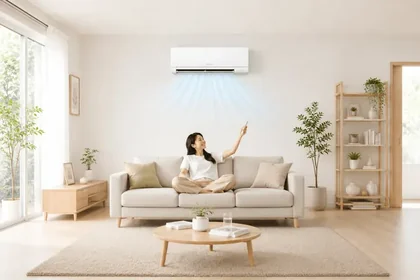
Choose a comfortable temperature
Set a temperature that keeps the room comfortable rather than automatically selecting the coldest setting. A smaller difference between indoor and outdoor temperatures generally reduces the cooling load. Use a timer or schedule when appropriate, rather than running the unit unnecessarily.
Manage the room's heat gain
Close doors and windows while cooling, limit direct afternoon sunlight with curtains or blinds, and reduce unnecessary heat sources. A properly sized system is important: both undersized and poorly matched installations can affect comfort and efficiency.
Keep airflow clear
Clean removable filters as instructed by the manufacturer and keep the intake and outlet unobstructed. Dirt on indoor or outdoor heat exchangers may reduce performance. Professional service may be needed when accessible filters are not the only issue.
Use fans intelligently
A fan can improve perceived comfort by moving air around the room. It does not lower room temperature by itself, so switch it off when its airflow is not helping anyone. Maintain the outdoor unit's required clearances rather than enclosing it tightly.
Monitor rather than guess
Electricity use depends on the AC's model, capacity, efficiency, operating hours and weather. If energy consumption increases unexpectedly, checking filters, settings and system condition may help identify a problem. Learn about AC cleaning or ask the branch about an inspection.
This article provides general information and cannot replace a site inspection. Electrical and refrigerant work should be undertaken by appropriately qualified personnel.